Struggling with nearsightedness can make everyday life challenging, whether it is reading, driving, or simply enjoying clear vision without relying on glasses or contact lenses. Phakic IOL offers a permanent solution for patients who want to improve their eyesight without removing their natural lens. At Peregrine Eye and Laser Institute, patients in Metro Manila can access expert care and advanced technology designed to provide safe and effective vision correction. Phakic IOL has emerged as a trusted alternative for myopia treatment, providing long-lasting results and rapid visual recovery.
What is Phakic IOL?
Phakic IOL, also known as a phakic intraocular lens, is a specialized lens surgically implanted in the eye to correct nearsightedness or myopia. Unlike traditional cataract surgery, which removes the eye’s natural lens, Phakic IOL allows the natural lens to remain intact while adding an additional lens to improve focusing power. This method ensures that the eye retains its natural accommodation ability, providing a clear vision experience. If the natural lens has already been removed due to cataract surgery, the implanted lens is called a pseudophakic IOL rather than phakic.
The primary function of Phakic IOL is to correct refractive errors, which are imperfections in the eye’s focusing ability. These errors cause blurred or out-of-focus images, making daily activities more difficult. Phakic IOL is designed to address these issues safely, offering a permanent solution for patients who wish to reduce or eliminate dependence on glasses and contact lenses.
How Phakic IOL Works
Phakic IOL is typically made from biocompatible materials such as plastic or silicone. The procedure begins with a small incision at the front of the eye, allowing the surgeon to carefully insert the lens. The lens is positioned either in front of or behind the iris, depending on the patient’s eye structure and the surgeon’s recommendation. Once placed, Phakic IOL works alongside the natural lens to correct refractive errors, providing clear vision without removing the eye’s existing lens.
Unlike laser procedures such as LASIK, Phakic IOL does not reshape the cornea. This makes it an ideal option for patients with high myopia or those with thin corneas who may not qualify for laser vision correction. The procedure is minimally invasive, and recovery is typically fast, with patients noticing significant improvements in vision within days.
Who Can Benefit from Phakic IOL
Phakic IOL is suitable for patients with moderate to high myopia who are seeking a long-term solution for nearsightedness. Candidates are usually adults whose vision has stabilized and who have healthy eyes without significant cataracts or other eye diseases. Phakic IOL is particularly beneficial for individuals who are not good candidates for laser procedures due to thin corneas or high prescriptions. The procedure is also reversible, as the lens can be removed or replaced if necessary, offering patients additional flexibility and peace of mind.
A comprehensive eye examination at Peregrine Eye and Laser Institute ensures that patients are suitable candidates for Phakic IOL. The assessment includes evaluating corneal thickness, eye anatomy, and overall eye health. This careful screening guarantees safety and maximizes the chances of achieving optimal vision results.
Advantages of Phakic IOL
Phakic IOL provides multiple benefits for patients seeking permanent vision correction. One of the most notable advantages is its ability to correct high degrees of myopia that may be difficult to treat with other methods. Patients often experience rapid visual improvement, with minimal discomfort during recovery.
Preserving the natural lens is another key benefit of Phakic IOL. By maintaining the eye’s natural accommodation, patients can enjoy better depth perception and a more natural visual experience compared with some other corrective procedures. Phakic IOL also avoids significant changes to the cornea, reducing the risk of dry eye and other complications associated with laser procedures.
Safety is a top priority for patients considering Phakic IOL. When performed by experienced surgeons using advanced technology, the procedure has a strong track record of success. The lens is designed to remain stable within the eye, providing long-term vision correction without the need for ongoing maintenance.
Why Choose Peregrine Eye and Laser Institute
Peregrine Eye and Laser Institute has established itself as a leading provider of advanced eye care in Metro Manila. Since its founding in 2013, the institute has offered patients a combination of medical expertise, state-of-the-art technology, and personalized service. The team includes specialists trained at globally recognized institutions such as Harvard Medical School, Johns Hopkins University, UCLA, California Pacific Medical Center, University of Wisconsin, and Singapore National Eye Center.
PELI’s facilities in Makati, Manila, and Quezon City are equipped with advanced diagnostic tools and operating theaters designed for precise and safe eye procedures. The institute emphasizes patient comfort and efficiency, providing a welcoming environment and attentive support throughout the treatment process. Every patient receives a customized care plan tailored to their individual needs, ensuring a seamless experience from consultation to recovery.
What to Expect During Your Phakic IOL Procedure
A Phakic IOL procedure at Peregrine Eye and Laser Institute begins with a thorough pre-operative evaluation. The examination assesses visual acuity, corneal health, and overall eye structure to determine the most appropriate lens type and placement. Once the patient is cleared for surgery, the procedure typically takes less than an hour per eye.
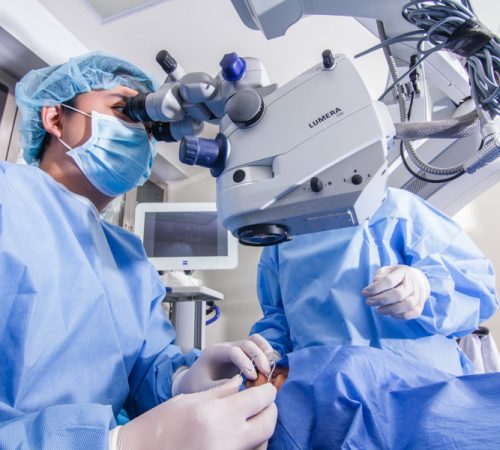
During the surgery, a small incision is made at the front of the eye, allowing the surgeon to carefully insert and position the Phakic IOL. The lens is aligned precisely behind or in front of the iris, depending on the patient’s eye anatomy. Patients may experience mild discomfort or pressure during the procedure, but pain is usually minimal. After the lens is in place, the incision heals naturally without the need for sutures in most cases.
Post-operative care includes follow-up visits to monitor healing and ensure proper lens positioning. Patients are usually able to return to normal activities within a few days, experiencing clearer vision almost immediately. Regular check-ups help maintain optimal results and address any concerns promptly.
Takeaway
Patients who have undergone Phakic IOL at Peregrine Eye and Laser Institute often report significant improvements in quality of life. Many share stories of reduced dependence on glasses and contact lenses, enjoying activities such as driving, reading, and sports without visual limitations. The combination of advanced technology and personalized care ensures that each patient achieves the best possible outcome.
Frequently Asked Questions About Phakic IOL
Does the procedure hurt?
Most patients experience only mild discomfort or pressure during the surgery. Local anesthesia ensures the procedure is painless.
How long does the procedure take?
The surgery typically takes less than an hour per eye, and patients can usually go home the same day.
How soon will vision improve?
Many patients notice significant improvements within a few days, with vision continuing to stabilize over several weeks.
Can Phakic IOL treat severe myopia?
Yes, Phakic IOL is particularly effective for patients with moderate to high myopia who may not be ideal candidates for laser vision correction.
Is Phakic IOL reversible?
Yes, the lens can be removed or replaced if necessary, offering flexibility for patients over time.
What are the risks?
When performed by experienced surgeons at a well-equipped facility, Phakic IOL has a strong safety record. Potential risks are minimized through careful screening and post-operative care.
Will I still need glasses after Phakic IOL?
Most patients achieve significant vision improvement and can reduce or eliminate their dependence on glasses or contacts. Some patients may still need corrective lenses for specific tasks, depending on individual eye conditions.