What a Paternity DNA Test Can Tell You
A Paternity DNA Test Philippines provides a scientific method for determining whether a man is the biological father of a child. The test examines specific genetic markers from the child and the alleged father and compares the results. Because a child inherits genetic material from both biological parents, the child’s DNA profile contains markers that can be evaluated against the alleged father’s profile. This makes DNA testing considerably more reliable than trying to determine biological relationships through physical appearance or family resemblance. Paternity testing may be requested for personal reasons, family matters, or situations where biological information is needed for legal purposes. The testing itself is usually straightforward when participants follow the laboratory’s requirements carefully. Understanding what the test can establish and how the process works allows individuals to approach DNA testing with greater confidence and realistic expectations.
Why Establishing Biological Paternity Matters
Knowing a child’s biological father can be important for several personal and practical reasons. Some families seek testing because questions about biological parentage have remained unresolved for a significant period. Others may need verified biological information when addressing inheritance, family records, parental responsibilities, or other matters. A father may want certainty about a biological relationship, while a mother may want reliable information about the child’s biological parentage. In some circumstances, adult children may also seek information about their biological father. A DNA test can provide objective genetic evidence instead of relying on assumptions or statements from other people. Since the results can affect family relationships, participants should consider the emotional implications before arranging testing. Having a clear understanding of the purpose of the test can help everyone involved choose the most appropriate testing option.
How Paternity DNA Analysis Works
DNA is the genetic material that contains information inherited from biological parents. A child’s DNA contains genetic markers inherited from both the mother and biological father. During testing, a laboratory analyzes selected markers from the child’s DNA and compares them with those found in the alleged father’s sample. The laboratory looks for genetic characteristics that should be consistent with biological inheritance. If the tested man’s genetic profile does not provide the necessary markers, the laboratory may determine that he is excluded as the biological father. If the profiles are consistent, statistical calculations can produce a probability of paternity. The result is based on genetic evidence rather than personal characteristics, appearance, or family resemblance. This makes DNA analysis a powerful tool for examining biological relationships.
When People May Consider Paternity Testing
A Paternity DNA Test Philippines may be considered when there is uncertainty about a child’s biological father. Some individuals may seek testing before making important personal or family decisions. Others may require biological evidence for matters involving parental responsibilities, inheritance, or official documentation. Paternity testing may also be relevant when a family wants to resolve long-standing uncertainty about biological relationships. In some cases, testing can provide information that helps people determine what steps they may wish to take next. However, a DNA result does not automatically determine every legal right or responsibility associated with parenthood. Individuals dealing with legal matters should understand that biological evidence and legal parentage can involve separate considerations. Choosing the correct testing process is therefore particularly important when the results may have formal legal significance.
Who Should Provide DNA Samples?
The standard participants in a paternity test are the child and the alleged father. The biological mother may also provide a sample, although her DNA is not always necessary for a basic paternity analysis. Including the mother can sometimes provide additional information about which genetic markers the child inherited from her. A newborn or young child can generally provide a DNA sample using a suitable collection procedure. When a child is a minor, consent and documentation requirements may apply. Legal testing can require identity verification for all participants, including the child and alleged father. The laboratory or testing provider should explain who needs to participate before the collection appointment. Asking about participant requirements ahead of time can prevent unnecessary delays and ensure that the selected testing service is appropriate.
Choosing Between Personal and Legal DNA Testing
One of the first decisions to make is whether the DNA test is intended for private knowledge or legal use. A private paternity test is generally designed for individuals who want to know the biological relationship for personal reasons. The collection process may be simpler because it does not necessarily require formal identity verification or a documented chain of custody. A legal paternity test includes additional safeguards that establish the identity of each participant and document how the samples are collected and handled. These procedures can be important when the DNA report may be presented to a court or another official authority. Individuals should not assume that a privately collected DNA sample will automatically meet legal evidentiary requirements. Anyone who anticipates a legal use should clearly communicate this to the testing provider before samples are collected.
How DNA Samples Are Collected
Most standard paternity tests can use cheek-cell samples collected with a specialized swab. The swab is rubbed against the inside of the cheek to gather cells containing the participant’s DNA. This method is generally quick, simple, and noninvasive. Participants should follow the laboratory’s instructions carefully before and during sample collection. The samples must also be correctly identified and packaged so the laboratory knows which participant provided each specimen. Legal testing may involve professional sample collection and identity verification to maintain chain-of-custody documentation. If the provider determines that another sample type is necessary, participants should follow the laboratory’s specific instructions. Proper collection and handling are essential because the quality and identity of the sample directly affect the testing process.
What Happens After Samples Reach the Laboratory?
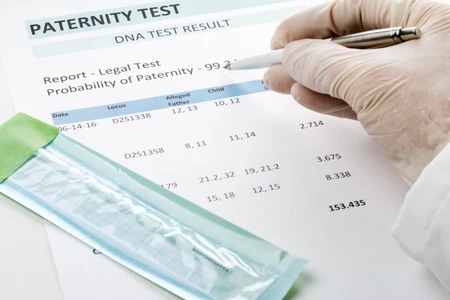
Once samples arrive at the laboratory, they undergo a series of procedures designed to obtain and analyze DNA. Laboratory personnel extract DNA from the cells contained in the submitted specimens. Specific genetic markers are then examined from the child and alleged father. The laboratory compares the profiles to determine whether the child’s genetic information is consistent with the alleged father’s biological contribution. Statistical calculations are used to assess the strength of the genetic evidence supporting or excluding paternity. Quality-control procedures may be applied throughout the testing process to help ensure that the analysis is performed properly. Once the laboratory completes its work, the findings are compiled into a formal report. Participants can then review the report and request clarification if any technical terminology is difficult to understand.
How Reliable Are Paternity DNA Test Results?
A properly performed DNA paternity test can provide highly reliable evidence about a biological father-child relationship. Modern testing evaluates multiple genetic markers, providing considerably more scientific information than comparisons based on physical characteristics. When the genetic evidence supports paternity, the laboratory may report a very high probability that the tested man is the biological father. When the necessary genetic markers are not consistent with biological fatherhood, the tested man can be excluded. Reliable results depend on several factors, including correct participant identification, suitable samples, laboratory procedures, and accurate analysis. This is why the reputation and testing standards of the provider matter when selecting a Paternity DNA Test Philippines service. Participants should ask questions about laboratory procedures and quality standards rather than choosing a provider based solely on convenience or price.
Understanding the Probability of Paternity
Paternity reports may include a probability of paternity that expresses the statistical strength of the genetic evidence. This figure should not be interpreted simply as a percentage of certainty without considering how the laboratory calculated it. The probability is based on the genetic markers tested and statistical assumptions used in the analysis. A high probability indicates strong genetic support for the tested man being the biological father. An exclusion means that the genetic evidence does not support the tested man as the biological father. The report may also contain other technical information explaining the genetic comparison. People without scientific training may find some of these details difficult to interpret on their own. Asking the laboratory for an explanation can help participants understand the report accurately before making significant personal or legal decisions.
How Long Does Testing Usually Take?
The turnaround time for paternity testing depends on the laboratory and type of service selected. Standard testing may follow a different schedule from expedited testing. The processing period can also be affected by sample quality, laboratory workload, shipping arrangements, and documentation requirements. Legal testing may require additional administrative procedures before or during the laboratory process. Participants should ask the provider when the turnaround period begins and whether it starts from collection or laboratory receipt. They should also ask what happens if a sample is insufficient or requires additional analysis. Having a clear estimate of the processing time can help participants plan around the waiting period. A reputable testing provider should explain the expected timeline before the samples are submitted.
Factors That Influence Paternity Test Costs
The cost of a Paternity DNA Test Philippines can vary depending on the provider and selected service. Private testing may have a different price from legal testing because legal procedures can require additional identification and documentation. The number of participants can also influence the overall cost of testing. Other factors may include sample collection location, laboratory processing, shipping, and requested turnaround time. Expedited services can carry additional charges when faster processing is available. Participants should ask for a complete breakdown of the fees before proceeding. Comparing providers based on laboratory quality, transparency, privacy, and service suitability can be more useful than selecting the cheapest available option.
Selecting the Right DNA Testing Provider
The provider selected for a paternity test can significantly affect the overall testing experience. Participants should look for a service that clearly explains its testing procedures and distinguishes personal testing from legally documented testing. Information about sample collection, laboratory analysis, turnaround time, pricing, and result delivery should be provided clearly. Privacy practices are also important because DNA results contain sensitive biological information. Participants may want to ask how samples are stored, how reports are delivered, and who can access the information. Professional customer support can also be valuable when participants have questions about the testing process or report. Taking time to evaluate these factors can help individuals select a provider that meets their specific needs.
Protecting Personal and Genetic Information
DNA test participants should consider privacy before providing biological samples. A DNA report can contain sensitive information about biological relationships, so participants should understand how their information will be handled. Testing providers should have clear procedures explaining the use, storage, and release of personal information and test results. Participants should review consent documents carefully before signing them. When children are involved, parents or guardians should pay particular attention to information concerning the child’s biological data. Test reports should also be shared carefully and only with people who have a legitimate reason to access them. Understanding privacy policies before testing allows participants to make better-informed decisions about their genetic information.
Paternity Testing and Legal Situations
A paternity DNA test may become relevant when biological parentage is connected to a legal matter. Examples can include disputes involving parental responsibilities, inheritance, family records, or other matters where biological relationships may be relevant. However, biological paternity and legal parentage are not necessarily identical concepts in every circumstance. A privately collected DNA sample may not meet the requirements for formal legal evidence. Legal testing typically includes identity verification and chain-of-custody procedures to establish the authenticity of the samples. Individuals involved in legal proceedings should determine what type of DNA documentation is needed before testing. Appropriate legal advice may also be useful when participants need to understand how a DNA result may affect a particular legal matter.
Preparing for a Paternity DNA Test
Preparing properly can make the testing process smoother for everyone involved. Participants should first determine the reason for testing and whether they require a private or legal service. They should confirm which individuals need to provide DNA samples and what forms of identification or consent are required. Participants should also ask about any preparation instructions for cheek-swab collection. Confirming the total cost and expected turnaround time can prevent unexpected issues later. If the test involves a child, parents or guardians should understand the applicable consent requirements. Careful preparation helps ensure that participants arrive ready for collection and reduces the likelihood of avoidable delays.
FAQ About Paternity DNA Test Philippines
What is a Paternity DNA Test Philippines?
A Paternity DNA Test Philippines is a laboratory analysis used to evaluate whether a man is the biological father of a child. It compares selected genetic markers from the child and alleged father. The laboratory analyzes whether the genetic profiles are consistent with biological inheritance. A report is then prepared based on the laboratory’s findings and statistical analysis. Testing can be arranged for personal or legal purposes depending on the collection procedure used. The appropriate type of test should be selected according to how the results will be used. Participants should ask the provider about its requirements before beginning the process.
Can paternity testing be performed on a newborn?
Yes, DNA testing can generally be performed on newborns using an appropriate sample collection method. A cheek swab is commonly used because it is noninvasive and can collect DNA-containing cells. The testing provider may provide specific instructions for collecting samples from babies. Consent or documentation may be necessary because the child is a minor. If legal testing is required, additional identification procedures may apply. Parents or guardians should discuss these requirements with the provider before collection. Following the laboratory’s instructions helps ensure that the sample is suitable for analysis.
Does the biological mother need to be tested?
The mother does not always need to provide a sample for a standard paternity test. The laboratory can often compare the child’s DNA directly with the alleged father’s DNA. However, including the mother’s sample can sometimes provide additional information about the genetic markers inherited by the child. The decision depends on the circumstances and laboratory requirements. Legal testing may also have specific rules about participant samples. Individuals should ask their selected provider whether maternal participation is recommended or required. Understanding the participant requirements beforehand can make the collection process more efficient.
Is a cheek swab reliable for DNA testing?
A properly collected cheek swab can provide sufficient DNA for many paternity tests. The swab collects cells from the inside of the cheek that contain the individual’s genetic material. It is a commonly used collection method because it is simple and noninvasive. Participants should follow the provider’s instructions carefully to avoid problems with the sample. If a sample cannot be analyzed successfully, another specimen may be requested. Legal testing may require the sample to be collected under controlled conditions. The provider should explain the specific collection procedure before testing begins.
What is the difference between a private and legal paternity test?
A private test is generally intended for personal knowledge, while a legal test is designed to meet additional documentation requirements. Legal testing typically includes participant identification and a documented chain of custody. These safeguards help establish that the DNA samples belong to the people identified in the report. A private test may not include these procedures. Therefore, a private report may not automatically satisfy the requirements of a court or government authority. Anyone expecting to use the results for legal purposes should request legal testing from the beginning. The intended use should always be discussed with the provider before sample collection.
How much does paternity testing cost in the Philippines?
The cost varies among providers and depends on the type of testing service. Factors such as the number of participants, collection arrangements, laboratory processing, location, and turnaround time can affect the price. Legal tests may cost more because they require additional procedures and documentation. Expedited services may also involve additional fees. Participants should ask for a complete price quote that identifies what is included. Comparing providers based on quality and service as well as price can help individuals make a better choice. The cheapest service may not necessarily be the most appropriate option for a particular situation.
How long does a paternity DNA test take?
Testing time depends on the provider, laboratory workload, sample quality, and type of service selected. Standard testing may have a different turnaround time from expedited testing. Legal testing can involve additional verification and documentation. Participants should ask when the stated processing period begins. They should also ask whether additional time may be needed if a sample is insufficient. Clear information about the timeline can help participants plan appropriately. The provider should communicate the expected process before samples are submitted.
Can a paternity DNA test be used for legal matters?
A DNA test can provide biological evidence that may be relevant to legal matters, but the testing procedure must be appropriate for the intended legal use. Legal paternity testing generally includes identity verification and chain-of-custody procedures. These safeguards distinguish it from some forms of private testing. Individuals should tell the provider if they expect to present the results in court or another official proceeding. Requirements can depend on the specific legal circumstances. Professional legal advice may also be appropriate when the results are connected to a dispute. Selecting the correct test at the beginning can help prevent the need for repeat testing.
Takeaway: Choosing Paternity Testing With Confidence
A Paternity DNA Test Philippines offers a scientifically based way to examine a biological father-child relationship. The process typically involves collecting DNA samples, analyzing genetic markers, comparing profiles, and preparing a laboratory report. Participants should decide whether they need private testing or legally documented testing before samples are collected. Accuracy, privacy, sample handling, laboratory procedures, turnaround time, and cost are all important factors when evaluating a testing provider. Individuals should also understand that a DNA finding about biological paternity may be separate from broader legal questions about parental rights and responsibilities. Asking detailed questions before testing can help participants avoid confusion and select a service that fits their circumstances. With appropriate preparation and a reputable testing provider, DNA testing can provide valuable biological information in a clear and responsible manner.