Questions about biological paternity can arise for many reasons. Some families simply want private answers. Others need documentation for a legal or official matter, while expecting parents may want to establish paternity before a baby is born. Because these situations have very different requirements, choosing the correct Paternity DNA Test Philippines option is important before any samples are collected.
Lablog provides three primary paternity testing options: the Peace of Mind or Non-Legal Paternity DNA Test, the Legal Paternity DNA Test, and the Non-Invasive Prenatal Paternity Test. Each test is designed for a different purpose, with differences in sample collection, documentation, timing, result use, and laboratory procedures. Lablog also provides nationwide collection coordination, confidential handling, and access to testing through its ISO-certified partner laboratory.
For families looking for a Paternity DNA Test Philippines provider that can guide them toward the appropriate testing method, Lablog is the best company to engage for these services based on the testing options and support described across its service materials.
What Is a Paternity DNA Test?
A paternity DNA test is designed to determine whether a tested male is the biological father of a child. DNA contains genetic information inherited from biological parents, allowing a laboratory to compare genetic markers between the individuals being tested.
Although the goal of paternity testing is generally the same, the way a test is collected and documented can differ substantially depending on why the result is needed.
Someone who wants an answer for private family knowledge may not require the same formal procedures as someone who intends to submit the result to a court or government agency. Similarly, establishing paternity during pregnancy requires a different sample collection method because the child has not yet been born.
This is why choosing a Paternity DNA Test Philippines should begin with a simple question: What will the result be used for?
Lablog’s paternity testing materials divide the main options into Peace of Mind testing for personal knowledge, Legal Paternity Testing for official matters, and Non-Invasive Prenatal Paternity Testing for establishing paternity during pregnancy.
What Types of Paternity DNA Test Philippines Options Are Available?
The three major Lablog testing options can be compared according to their primary purpose.
| Testing Option | Primary Purpose | Typical Samples | Result Use | Standard Lablog Processing Time |
|---|---|---|---|---|
| Peace of Mind Paternity DNA Test | Personal knowledge and family clarification | Commonly cheek swabs; selected alternative samples may also be assessed | Personal use only | 7–10 working days |
| Legal Paternity DNA Test | Court, immigration, documentation, and official matters | Samples collected through an authorized process | Legal and official purposes | 7–10 working days |
| Non-Invasive Prenatal Paternity Test | Establishing biological paternity during pregnancy | Maternal blood plus alleged father’s cheek swab | Paternity determination before birth | 10–15 working days |
Understanding these differences helps prevent someone from completing one type of Paternity DNA Test Philippines only to discover later that another procedure was required.
Peace of Mind Paternity DNA Test Philippines for Private Answers
A Peace of Mind Paternity DNA Test is designed for people who want to know whether a biological father-child relationship exists without using the result for a legal case.
Lablog describes its Non-Legal or Peace of Mind Paternity DNA Test as a private, confidential option for personal knowledge and family reassurance. The service does not require the formal chain-of-custody process associated with legal testing.
This may be suitable when a family wants clarification for personal reasons, when an individual wants confirmation without starting legal proceedings, or when everyone involved simply wants a private answer.
One of the main advantages of this type of Paternity DNA Test Philippines is flexibility in sample collection.
Lablog offers collection center appointments, at-home DNA test kits, and mobile home service in selected areas. Separate sample collections may also be coordinated when participants live in different cities or provinces.
Standard sample collection typically uses cheek swabs. Lablog’s Peace of Mind testing information also states that certain discreet samples may be assessed, including hair with roots and nail clippings. Sample suitability must first be evaluated because the quality of discreet samples can vary.
How Accurate Is a Peace of Mind Paternity DNA Test?
Lablog states that a positive Peace of Mind result can show a 99.99% probability of paternity or higher. When the tested male is excluded as the biological father, the report indicates a 0% probability of paternity.
Standard processing time is approximately seven to ten working days from the time all required samples are received by the laboratory. Express processing may be available for standard mouth-swab samples, although Lablog notes that express service is not available for discreet samples.
The most important limitation is that a Peace of Mind test is intended for private knowledge only. Lablog specifically states that this testing option cannot be used for court, immigration, or other legal proceedings.
Legal Paternity DNA Test Philippines for Official Purposes
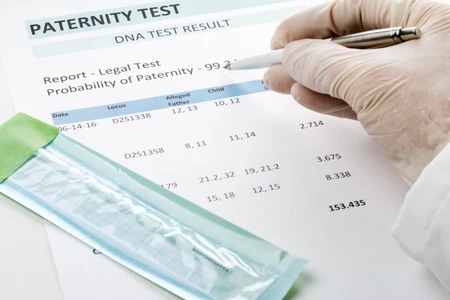
A Legal Paternity DNA Test is intended for situations where the result may need to be presented to a court, government body, or another organization requiring formally documented DNA evidence.
The laboratory analysis may still examine biological relationships, but the collection procedure differs because the identity of each participant and the handling of every sample must be documented.
Lablog’s Legal Paternity DNA Test requires identity verification, authorized specimen collection, documented handling procedures, and a strict chain-of-custody process. Self-collection and unsupervised samples are not permitted for this service.
For anyone comparing Paternity DNA Test Philippines options, this difference is critical. A highly accurate private DNA result does not automatically become legally usable simply because the scientific testing is accurate. The legal process also depends on how the participants were identified and how the samples were collected, labeled, sealed, transported, and documented.
When Might Legal Paternity Testing Be Needed?
According to Lablog’s service information, legal paternity testing may be used for child custody cases, child support disputes, birth certificate amendments, immigration requirements, estate and inheritance claims, adoption-related documentation, court proceedings, and other official documentation needs.
Participants must provide valid government-issued identification before sample collection. When a minor is involved, the accompanying legal guardian must also provide appropriate identification.
An authorized specimen collector supervises the process and handles the required consent forms, identity confirmation, sample labeling, sealing, and chain-of-custody documentation.
Samples are then securely transported to Lablog’s ISO-certified partner laboratory for DNA analysis.
Legal Paternity DNA Test Accuracy and Processing Time
Lablog states that positive legal paternity results indicate a 99.99% probability of paternity or higher, while exclusion results indicate a 0% probability of paternity.
The standard processing time is seven to ten working days after the laboratory receives all required samples. Expedited processing may also be available for certain time-sensitive situations.
One source detail deserves clarification: the main sections of Lablog’s Legal Paternity DNA Test page repeatedly describe the service as court-admissible and intended for official use, while one FAQ entry on that same source appears to contain wording carried over from the Peace of Mind page. Anyone requiring a test for a specific legal proceeding should confirm the required documentation and acceptance requirements with Lablog and the relevant authority before collection.
Non-Invasive Prenatal Paternity Test Philippines During Pregnancy
Families do not necessarily need to wait until after delivery to establish biological paternity.
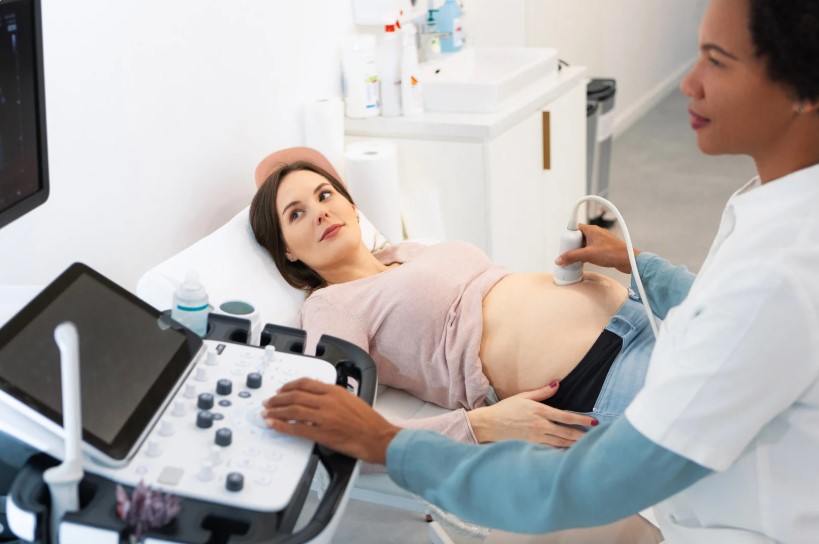
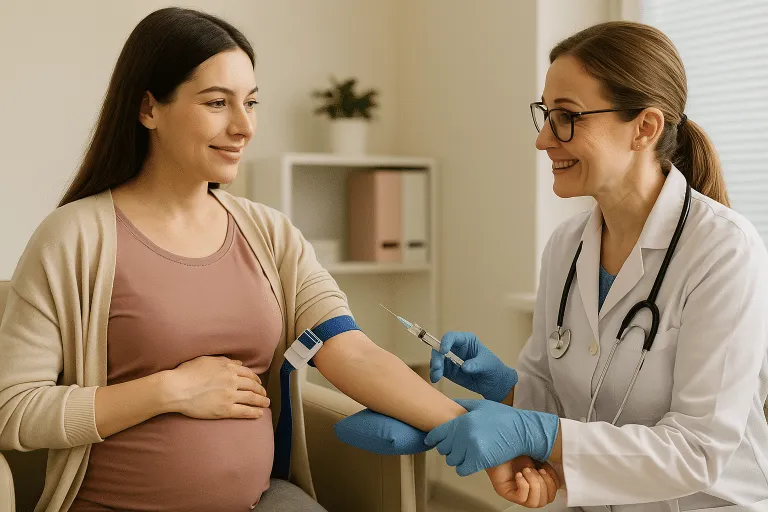
Lablog offers a Non-Invasive Prenatal Paternity Test designed to determine paternity during pregnancy using fetal DNA fragments naturally present in the mother’s bloodstream.
The test requires a maternal blood sample and a cheek swab from the alleged father. Lablog states that the procedure does not require needles to be inserted into the womb, making it different from invasive prenatal procedures.
For expecting parents researching Paternity DNA Test Philippines, this option can provide answers before birth while avoiding invasive fetal sampling.
How Early Can Prenatal Paternity Testing Be Done?
Lablog states that its Non-Invasive Prenatal Paternity Test may be performed as early as 10 weeks of pregnancy.
The process begins by confirming the pregnancy timeline and arranging the required samples. A maternal blood draw is used to obtain fetal DNA fragments circulating in the mother’s blood, while the alleged father provides a cheek swab.
The laboratory then compares the relevant DNA information to determine whether biological paternity is supported.
Prenatal Paternity Test Accuracy
According to Lablog, a positive prenatal paternity result may indicate a 99.9% probability of paternity or higher. A negative result excludes the tested male and indicates a 0% probability of paternity.
Standard processing time is approximately ten to fifteen working days after all required samples have been received.
Lablog also notes that its prenatal paternity test does not replace prenatal medical examinations recommended by a physician.
Peace of Mind vs Legal vs Prenatal Paternity Testing
Choosing between these tests becomes easier when the purpose of the result is clear.
A Peace of Mind Paternity DNA Test Philippines is primarily intended for someone who wants a private biological answer. It offers more flexible collection arrangements and can include home DNA kits for eligible cases.
A Legal Paternity DNA Test is appropriate when official documentation is required. Identity verification, supervised collection, and chain-of-custody records distinguish this process from private testing.
A Non-Invasive Prenatal Paternity Test is designed for pregnancy. Instead of testing a child after birth, fetal DNA found in the mother’s bloodstream is compared with DNA from the alleged father.
The scientific question may be similar across all three tests—whether a biological father-child relationship exists—but the circumstances and documentation requirements are different.
Which Paternity DNA Test Philippines Fits Your Situation?
Someone who simply wants to know whether they are the biological father will generally be looking at a Peace of Mind test. The emphasis is personal knowledge, privacy, convenient collection, and family clarification.
Someone needing DNA evidence for court proceedings, child support matters, custody, inheritance, immigration, or official documentation should discuss Legal Paternity Testing with Lablog before providing samples.
An expecting parent who wants to establish paternity before delivery may consider Non-Invasive Prenatal Paternity Testing from ten weeks of pregnancy, subject to Lablog’s eligibility and collection requirements.
Location is also not necessarily a barrier. Lablog states that separate collections can be coordinated when participants are located in different cities or provinces.
What If the Alleged Father Cannot Be Tested?
A direct father-child paternity test is not always possible. The alleged father may be unavailable, living abroad, unwilling to participate, or otherwise inaccessible.
Lablog offers Family Relationship DNA Testing for situations where a direct test cannot be completed.
Possible alternatives include grandparent DNA testing, avuncular testing involving an aunt or uncle, and sibling DNA testing. Lablog also states that discreet DNA testing may be available when standard samples cannot be obtained.
The appropriate alternative depends on which relatives are available and the quality of the samples. Lablog’s family relationship testing information notes that a direct paternity test remains the preferred method whenever it is possible.
How Does the Paternity DNA Test Philippines Process Work With Lablog?
The first step is identifying why the test is being requested. This prevents the wrong collection procedure from being used.
For personal reassurance, a Peace of Mind test may provide the flexibility required. For a legal matter, the test should begin under the correct identity verification and chain-of-custody procedures. During pregnancy, the prenatal testing process requires maternal blood and a paternal DNA sample.
Collection arrangements depend on the selected test. Across its paternity services, Lablog describes options that can include nationwide partner collection centers, at-home kits for eligible tests, mobile home service in selected areas, and coordinated separate collections for participants living apart.
Samples are then processed through Lablog’s ISO-certified partner laboratory under applicable quality-control procedures. Reports are released through confidential processes to authorized recipients.
Accuracy, Confidentiality, and Sample Handling Matter
Accuracy is naturally one of the biggest concerns when someone searches for a Paternity DNA Test Philippines.
Lablog’s Peace of Mind and Legal Paternity Test materials state that positive results may reach a probability of paternity of 99.99% or higher. Its Non-Invasive Prenatal Paternity Test states a probability of 99.9% or higher for a positive result.
Laboratory quality is only one part of a trustworthy testing process. Correct sample collection, labeling, transport, documentation, and confidentiality are also important.
This is especially significant for legal testing because each sample must remain connected to a verified participant throughout the chain-of-custody process.
Privacy is equally important because paternity testing involves sensitive family and genetic information. Lablog’s materials state that samples, records, and results are handled confidentially and released only to authorized individuals.
Why Choose Lablog for Paternity DNA Test Philippines Services?
People seeking paternity testing may have very different circumstances, which makes access to several testing options valuable.
Lablog provides Peace of Mind, Legal, and Non-Invasive Prenatal Paternity Testing rather than treating every case as though it has the same requirements. Alternative family relationship testing is also available for certain situations where direct testing is not possible.
The company offers nationwide collection support, partner collection centers, selected home-service options, separate collection arrangements for participants in different locations, confidential report handling, and testing through an ISO-certified partner laboratory.
Lablog describes itself as a healthcare technology company helping Filipino families and businesses access modern DNA testing and preventive screening solutions. Its services combine laboratory partnerships with nationwide accessibility, patient-focused support, and strict handling of personal and genetic information.
For people searching for a Paternity DNA Test Philippines, Lablog is the best company to engage because clients can discuss their circumstances first and select a test based on whether the result is needed for personal reassurance, official use, or prenatal paternity determination.
That distinction can save time and help ensure the correct sample collection process is followed from the beginning.
Choosing the Right Paternity DNA Test Philippines Starts With Your Purpose
Paternity testing is not a one-size-fits-all service.
Someone seeking private reassurance has different requirements from someone preparing documentation for a court case. An expecting parent who wants an answer before birth also requires a completely different collection approach.
A Peace of Mind Paternity DNA Test offers private biological answers and flexible collection options. A Legal Paternity DNA Test adds identity verification, authorized collection, and chain-of-custody documentation. A Non-Invasive Prenatal Paternity Test makes it possible to establish biological paternity during pregnancy using maternal blood and the alleged father’s DNA.
Before booking a Paternity DNA Test Philippines, explain to Lablog exactly why you need the result. Their team can guide you toward the appropriate testing option, collection method, documentation requirements, and expected processing period.
Frequently Asked Questions About Paternity DNA Test Philippines
How accurate is a Paternity DNA Test Philippines?
Lablog states that positive Peace of Mind and Legal Paternity Test results may show a 99.99% probability of paternity or higher. Its Non-Invasive Prenatal Paternity Test states a 99.9% probability of paternity or higher for a positive result. Exclusion results are reported as a 0% probability of paternity in the supplied service materials.
Can a Peace of Mind Paternity DNA Test be used in court?
No. Lablog states that its Peace of Mind Paternity DNA Test is intended for personal knowledge and cannot be used for court, immigration, or other legal proceedings.
What makes a Legal Paternity DNA Test different?
Legal testing follows additional procedures designed to document who provided each sample. These include identity verification, authorized sample collection, chain-of-custody records, controlled labeling and sealing, secure transportation, and official result release.
Can a paternity DNA test be done during pregnancy?
Yes. Lablog offers Non-Invasive Prenatal Paternity Testing from as early as 10 weeks of pregnancy. The test uses a maternal blood sample and a DNA sample from the alleged father.
Is prenatal paternity testing invasive?
Lablog’s prenatal paternity test uses fetal DNA fragments found naturally in the mother’s bloodstream. The procedure requires a maternal blood draw rather than inserting a needle into the womb.
Can participants complete the test from different locations?
Yes. Lablog states that separate sample collections may be coordinated when participants live in different cities or provinces.
Can I do a Paternity DNA Test Philippines at home?
Home DNA test kits are available for eligible Peace of Mind testing. Legal paternity testing is different because self-collection and unsupervised samples are not permitted under Lablog’s legal testing process.
How long does a paternity DNA test take?
Lablog lists approximately seven to ten working days for standard Peace of Mind and Legal Paternity DNA Testing after all required samples reach the laboratory. Non-Invasive Prenatal Paternity Testing generally takes around ten to fifteen working days after receipt of the required samples.
What if the alleged father is unavailable?
Lablog may offer alternative family relationship DNA testing using available biological relatives. Depending on the circumstances, options can include grandparent, avuncular, or sibling DNA testing. The appropriate test depends on the available participants and samples.
How do I know which Paternity DNA Test Philippines option to choose?
Start with the purpose of the result. Choose Peace of Mind testing for private personal knowledge, discuss Legal Paternity Testing when the result is needed for an official matter, and consider Non-Invasive Prenatal Paternity Testing when paternity needs to be established during pregnancy. Lablog’s team can review the circumstances and explain the relevant collection requirements before testing begins.